FORGET THE AIR
— At my age, I should stop smoking.
That was what my father said a few months before the pandemic year, as he puffed out smoke-laden words.
In that instant, I was pulled into memories of my childhood, immersed in dense fog and scented by the pungent smell of nicotine. I remembered how his exhalations mingled with the hot steam of a cup of coffee, distorting his face. His contours dissolved before me as if the smoke swallowed him, dragging his presence into another plane.
At the age of seven, my grandparents sent him to a boarding school, where he lived enveloped in the haze of the incense burners of Catholic masses. We both grew up within a kind of sfumato.
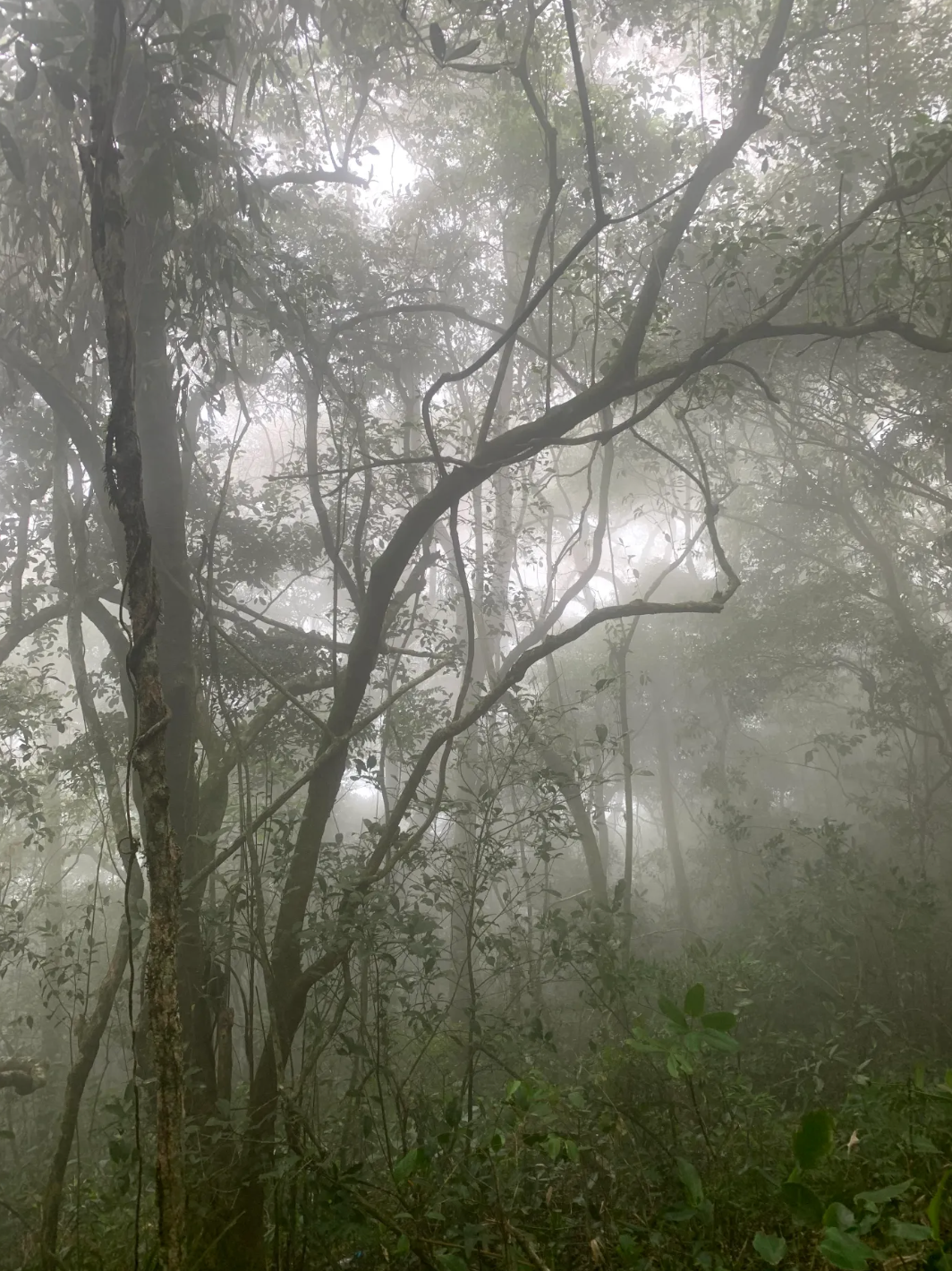
I, too, had poorly defined contours, dissolved among trees, blurred by the low mist at 1,600 meters of altitude in the interior of Brazil, which crept along the ground, camouflaging the landscape condensed by rivers and tropical forests. In these mountainous regions, when night meets morning, the cold, heavy air descends and condenses until the sun warms enough to dissipate it. The mist wrapped around me like a soft blanket, turning each step into an ephemeral trace that exhaled a damp smell of earth and the sound of twisted branches. The reduced visibility allowed my imagination to draw the faded path. I spent hours in the cold, blowing into the fog and stepping in vain.
At that time, Brígida Baltar had not yet collected dew and mist. I am referring to the photo-action The Collection of Fog #24 (1996–1999), a series of photographs that records the Brazilian artist performing the act of storing such humid invisibilities in glass bottles. There, where life passes and sprouts invisibly within this vast field of pastel tones, Brígida Baltar poetically captured something volatile: the air that escapes us with every exhalation. An intimate collector of the fleeting, Baltar stored the dense humidity of the forest, capable of concealing any trace of human presence. The forest hides itself and also knows how to conceal.
The farther from the sea and the higher the forest rises, the more it suspends the trees on peaks and renders the air rare. I remember that when we traveled by car and climbed the mountain, vertigo overtook the body, which forgot the air outside itself and inverted, filled with negative space. Slowly, the measured gesture emptied the landscape, and I fell asleep in the back seat.
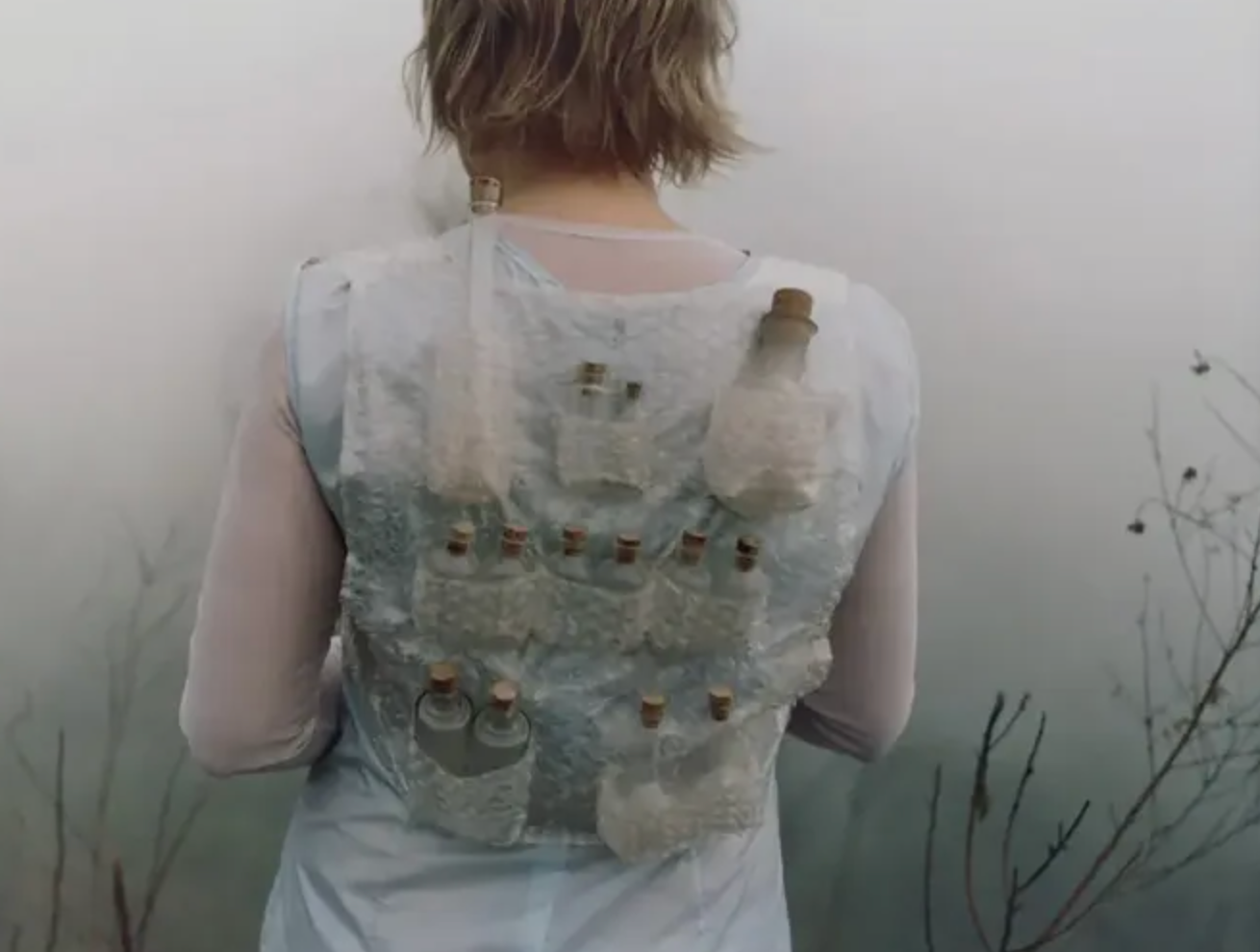
The Collection of Fog, 2002; photograph; 39.7 × 58.5 cm; Gilberto Chateaubriand Collection, MAM Rio (part of a work consisting of four photographs).
On May 29, 1983, my grandfather lived at sea level; even so, his lung succumbed. That morning, he told me a secret:
— When air is lacking, do not try to imprison it. Stretch your body, open your lungs. Face the void. Face fear. Let everything go. Air does not belong to you; it belongs to no one; it never has. Life is a breath that cannot be captured.
I think my grandfather did not know Brígida Baltar; perhaps she could have lent him one of her little capturing jars.
I migrated, as some animals do to escape the cold; I descended the mountains and ran aground on the Carioca coast, where salty waves chase away the fog, and the forest, unashamed, flaunts vibrant colors.
It was winter in the pandemic year, and I was awakened in apnea at 3:30 a.m., disoriented and with low brain activity. According to circadian cycle theory, which dictates the natural biological rhythm regulating our physiological processes, this is the hour when the lungs reach the peak of their energetic activity, meaning the body is focused on breathing, blood purification, and oxygen distribution throughout the organism. In that jolt, I imagined how many other atmospheres exist on other planets—so many other mixtures and clouds of gas that preceded our solar system until this one could be sustained and fixed by gravity.
In the back seat, during car trips through the mountains, I liked to open the window and watch the clouds and the shapes they took, contemplating their dissolutions with the wind on my face. At the same time, I reflected on how much effort nature exerts to spin gaseous cosmic dust and produce flows of life. I only wanted to breathe freely, without the weight of bills burying my chest. Instead, I turned on the computer, paid the bills, and saved the data in the clouds, falsely protected by air conditioning. As if air had been denied to me by a silent decree, I disconnected from everything: I closed Windows and opened the bedroom window, but no wind, no appeal, no leaf stirred its prayer on the tree lying outside the window. In the imperative intimacy of the home, the air had already forgotten me.
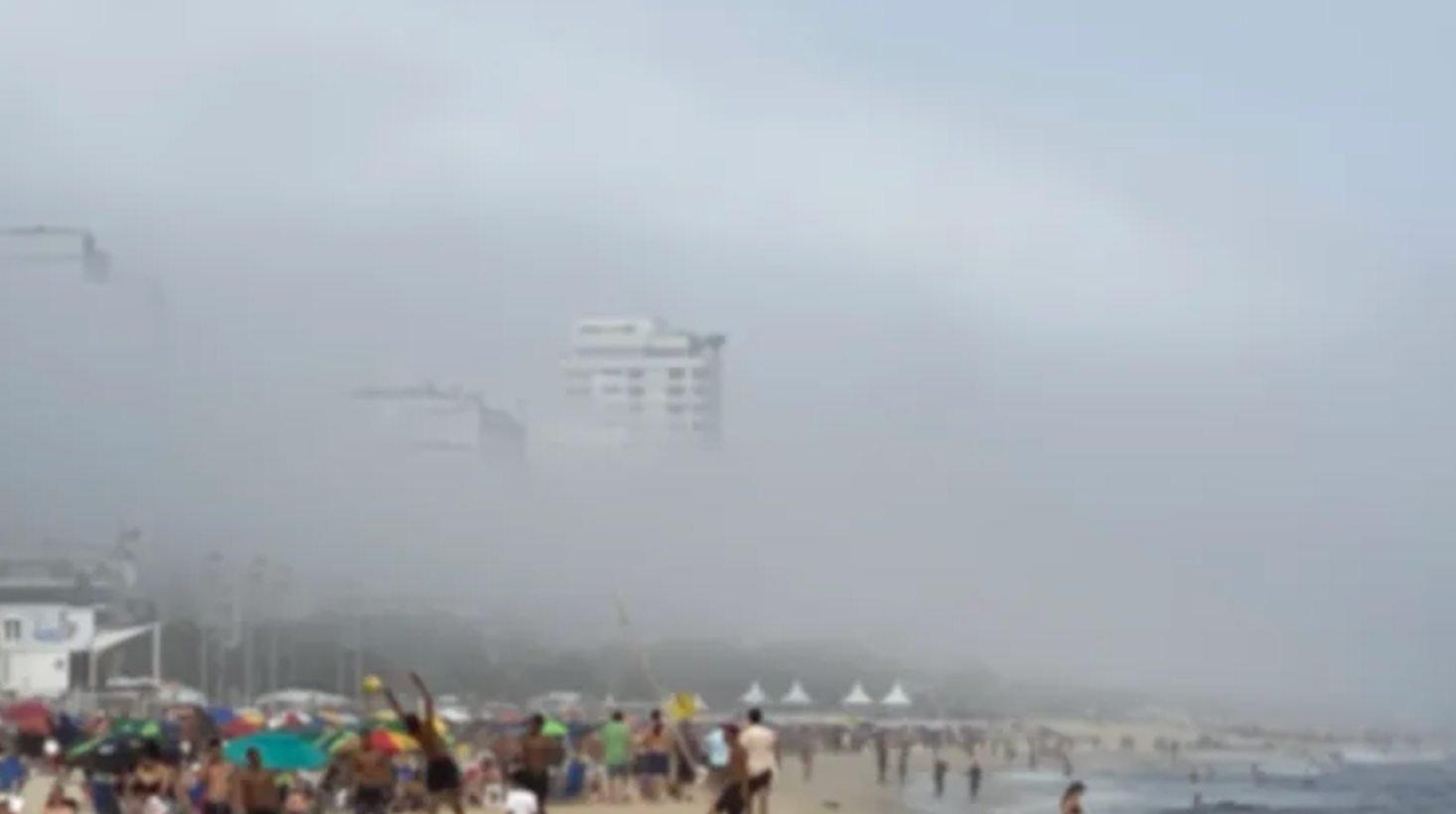
Leblon, Rio de Janeiro, 2024
— What do you mean, he’s dead? — I asked when I read the message on my phone in the morning. I got dressed and drove to the hospital in the Humaitá neighborhood, in Rio de Janeiro.
The smell was strong, ether impregnating the memory of the dead body, purplish on the metal gurney, waiting for me—alive—for recognition.
Cause of death: acute respiratory failure by asphyxiation.
On the way home, I decided not to be a passive smoker anymore. I bought a pack of cigarettes; even though I did not smoke, I lit just one and let it burn like incense in the ashtray.
Tobacco is a portal. For Quechua shamans, tobacco is the father of all plants; therefore, it should not be turned into smoke lightly—it demands ritual. Each plant has its psyche, summons ancestral consciousness, and invokes spirits—just as my father unknowingly did every day at the breakfast table, with his cup and steaming ashtray.
The smoke of mĩri carries great spiritual power, used to connect with the spirits of the forest, the xapiri. It carries the substance of dreams, yãkoana, allowing one to see beyond visible reality and cross into the spirit world, navigating between dimensions.
When we inhale, we become all other things; when we exhale, we disappear into the whole, like the mist that covers the forest.
When fumigating, we become transparent and shapeless.
When inhaling, we are absorbed by aspiration.
When vaporizing, pressure is applied until the alternation of temperature transforms us into gas.
When inhaling, we are absorbed by aspiration.
When vaporizing, pressure is applied until the alternation of temperature transforms us into gas.
Smoke bends light, breaking darkness.
The air we breathe is spiritual.
I lived alone, in social isolation, trying to communicate. Just as the Brazilian writer Hilda Hilst sought contact, I too knew that from then on I would never smoke a pipe or cigar alone. Hilst lived in self-imposed exile on her farm, Casa do Sol, where she maintained a radio station and applied transcommunication methods to speak with the dead and spirits. Isolated, between one cigarette and another, she drew pictographs of surreal hybrid beings, recording many voices from beyond on magnetic tapes, capturing whispers of moving air.
— You who are dead, do you live? — was the question that guided Hilda Hilst.
In this crossing of the visible, I recall how entering the fog dissolves contours toward the invisible and creates an intimate space filled with air and other immaterial subtleties.
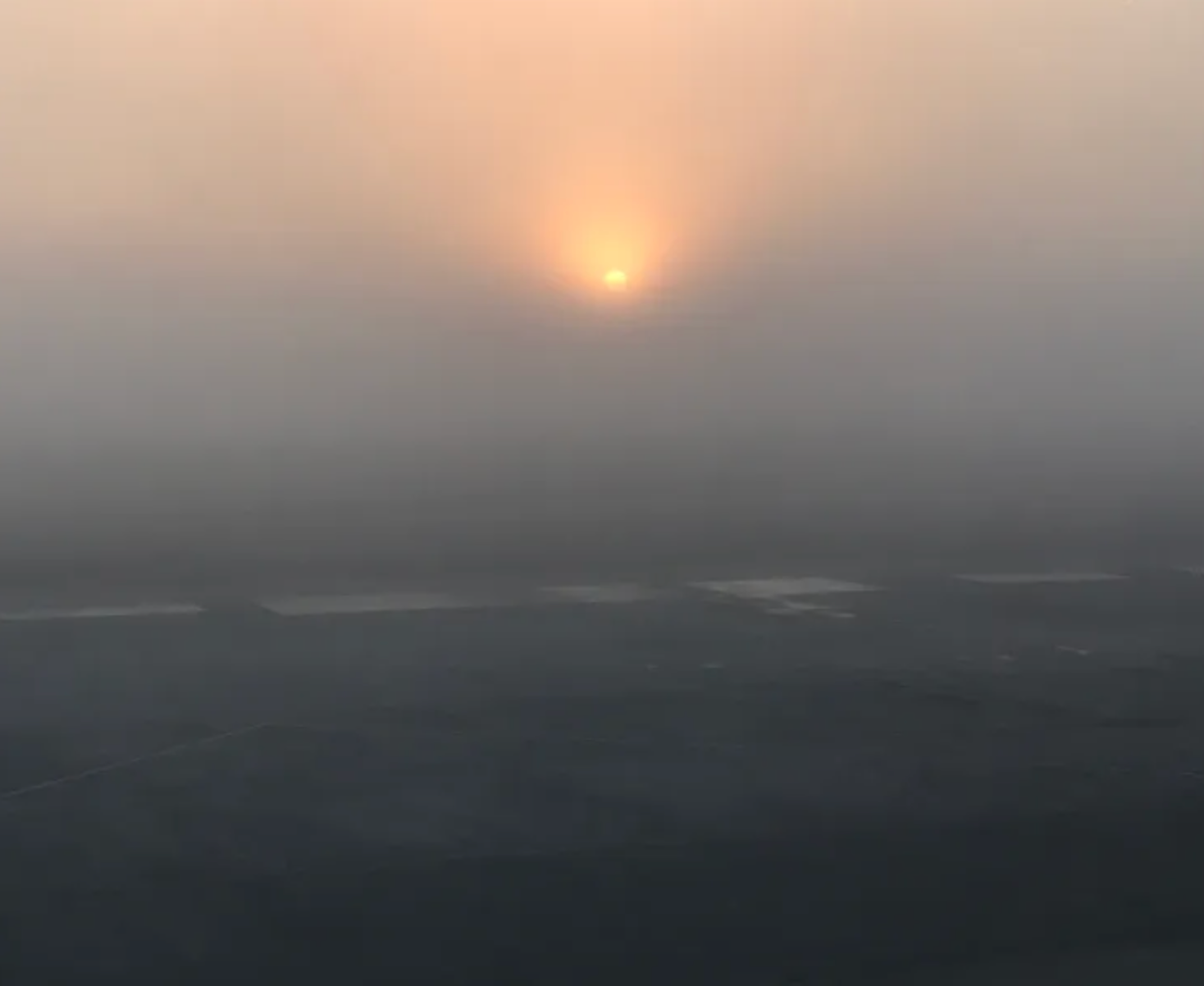
Curitiba, 2016
Still with eyes gritty from sleep and fumigation, I opened my phone, and the algorithms sent me the following news: “After death, the human brain remains alive for another seven minutes, holding only the best memories.”
I walked to the bathroom, stared at the Lorenzetti shower set to position one, and turned on the tap. The tiled landscape began to fog over, and the mirror ahead was barely visible—yet which would be my best memories?
The first drop of water that ran over my shoulder triggered involuntary memory. In the dreamlike scene, I lost my umbrella in the windstorm and ran for shelter through a wooden door that opened onto a narrow corridor. I walked pressed between walls stained with the smell of mold until a mahogany lattice broke my path. I peeked through the slits and saw him in his favorite outfit: a light blue short-sleeved button-down shirt with a pocket. It was the first time I encountered him again, without the smell of ether or flowers.
The Yanomami say that to truly know someone, one must make the effort to dream of them and keep their image within oneself. In the mountains of my childhood, I dragged lines with my feet to find the xapiri, uncovering the fog to reveal the ground and find the path, breathing an atmosphere charged with invisible presences.
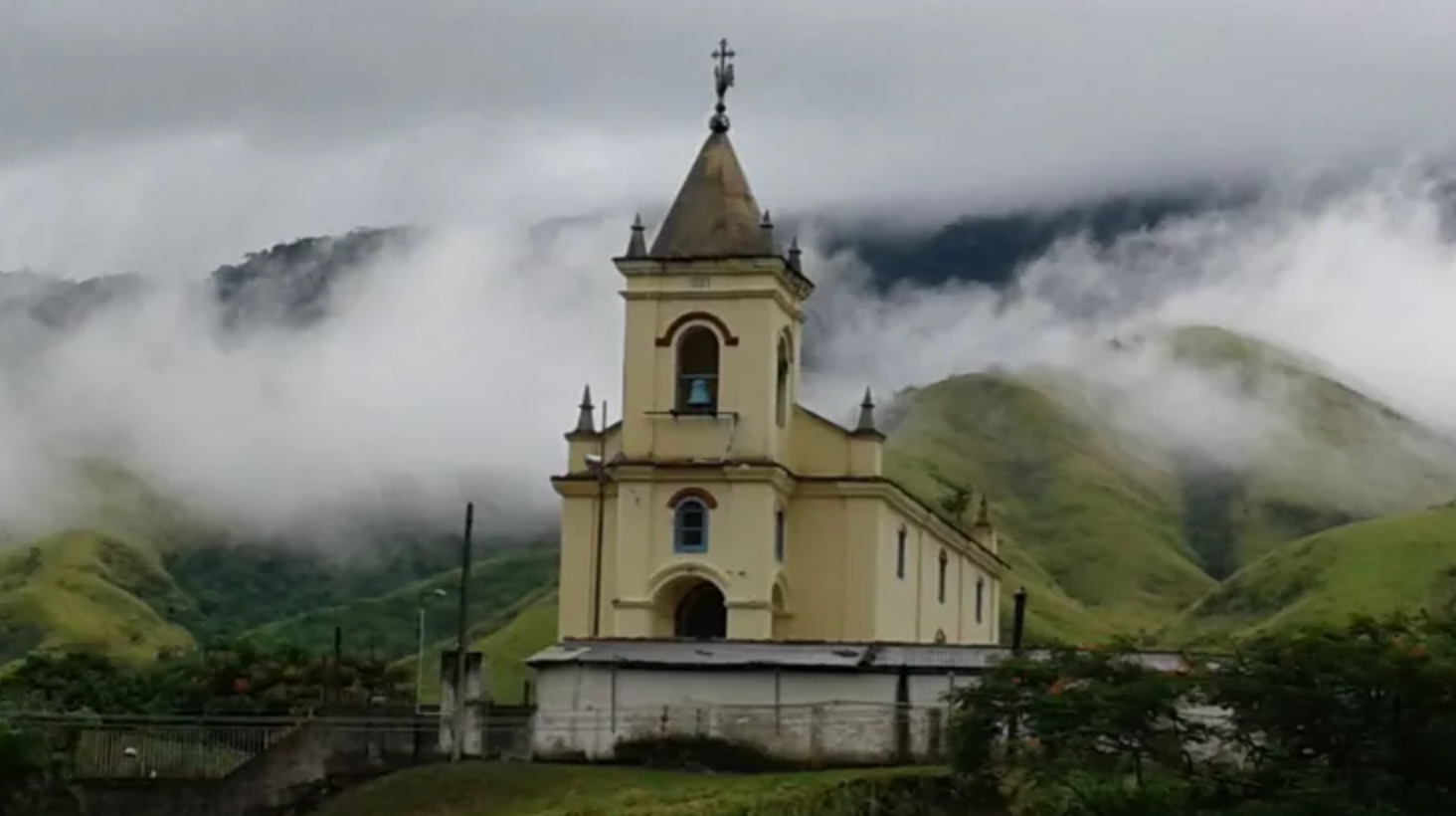
Conrado, Miguel Pereira, 2016
I awoke in the early hours of August 23, 2024, with heat rising through my neck and covering my ears. I could feel my arms on fire, as if embers lay on my skin. The strategy of disappearance incinerated and concealed bodies en masse. I thought that if Hilda Hilst were there, she would have recorded the scream of fire, and Brígida Baltar would have captured the dancing particles. The forest speaks to us when it is wounded; it tells us a secret:
— When air is lacking, do not try to capture it more and more. Life is a breath.
I breathed the difficulty of thick smoke covering the roof of my mouth; and through the window, soot danced and disintegrated.
In blurred landscapes, as in zones of exception or fog, everything disappears, and gentle steps walk toward nowhere: dragging the soles of the feet and lifting dust from the ground is a praise to the mist.